
🙃 | I Missed SuperZoo 2026, But I Didn't Miss the Story
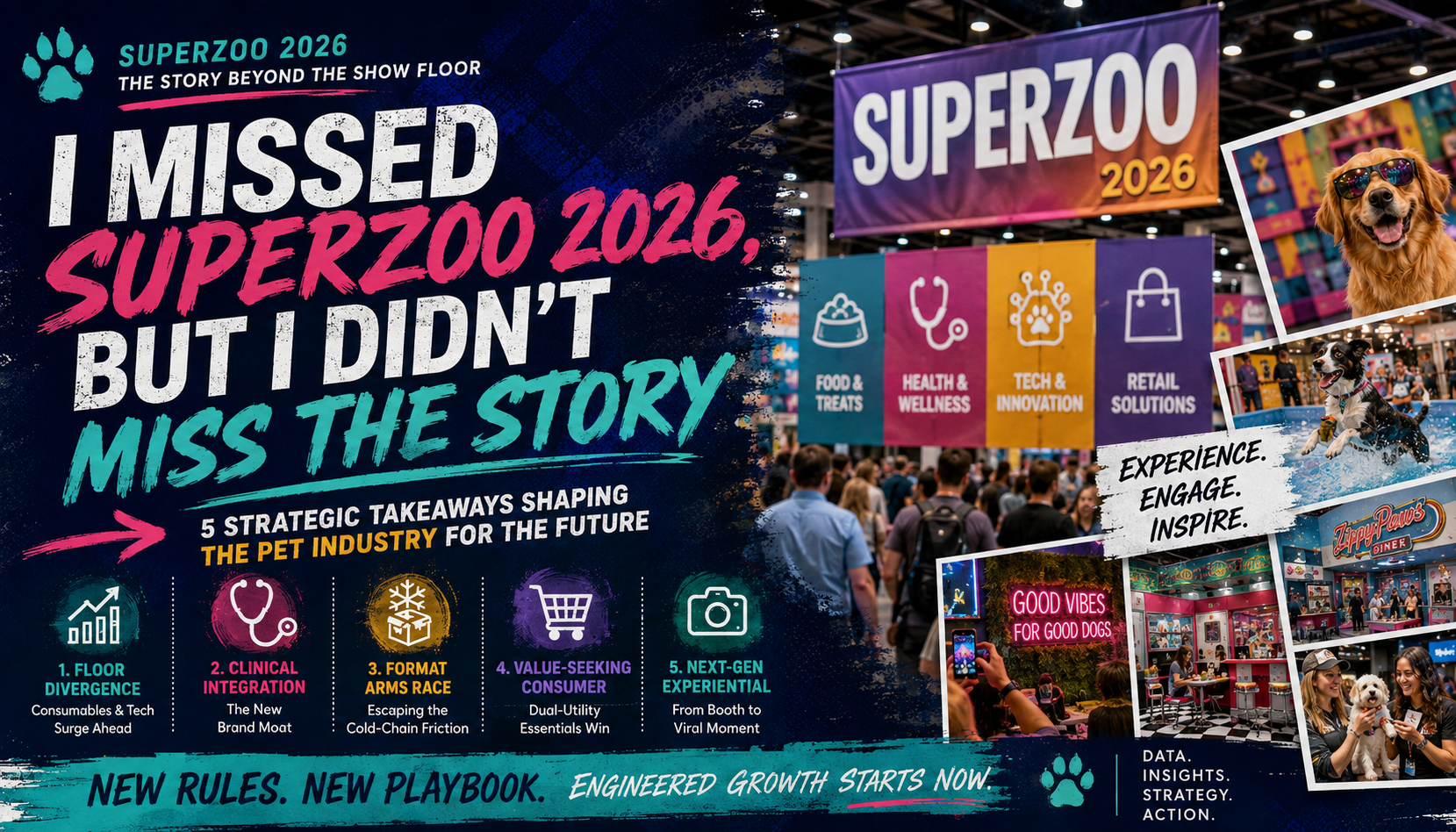
Source: Jeff Mard, Claude, Chat GPT & Many Wonderful Partners
Real talk, I sprained my ankle right before SuperZoo this year and had to sit this one out. First time in a while I've missed it, and it stung more than the ankle did (well, kinda).
But I still wanted to know what actually happened on that floor at Mandalay Bay. So I did what I always do. Called friends. Texted people I trust. Leaned on sources I actually believe, like my good friends at The Underbite.
Between all those conversations, a pretty clear picture came together. Here's what stood out to me.
The floor turned over more than the headline number suggests
According to The Underbite, 1,195 exhibitors showed up this year, only down slightly from 1,230 last year. Looks stable on paper. But 573 exhibitors from last year didn't come back, replaced by 538 new ones. That's a 53% retention rate. Quietly, the floor got rebuilt.
Consumables and tech are doubling down. Cat food and treats replaced 125% of who left. Dog food wasn't far behind at 89%. Tech replaced 108%. Meanwhile hardgoods and services pulled back, replacing just 78% of departures, with services alone barely over half.
Makes sense once you look at the cost. Booth space runs $32 to $37 a square foot, and total show costs can blow past $50,000 before travel and lodging. If you're an established bed, toy, or grooming brand already reaching buyers through other channels, that math gets harder to justify every year. If you're a new consumables brand chasing distribution, it still pencils out.
Vet-level credibility is becoming table stakes
SuperZoo partnered with US Vet Shows this year, bringing accredited vet continuing education straight to the show floor for the first time. That's not a scheduling footnote. It's a signal. The line between retail wellness and clinical care is disappearing.
IDEXX launched a point-of-care cardiac test that lets vets run bloodwork in-house instead of sending it out. VetRec is rolling out AI scribe tools across vet clinics in Australia and New Zealand, saving hundreds of admin hours per clinic. Whether you're building a supplement, an app, or a premium diet, clinical credibility isn't optional anymore. It's becoming the new brand moat.
Brands are engineering their way around the cold chain
Fresh pet food built its growth on subscriptions, but subscription fatigue and cold-chain logistics are pushing brands to rethink format. Nom Nom rolled out scoopable frozen meal clusters you don't have to thaw. The Farmer's Dog went further with a shelf-stable, rehydratable product. Packaging and format are quietly becoming the next competitive battleground, especially for anyone trying to move fresh, premium products into traditional retail.
Pet parents are being strategic, not cutting back
Pet Valu reported its first negative same-store sales quarter in a while, driven by fewer shopping trips. APPA's 2026 Dog Report showed treat spending down 11%. But preventative categories are surging. Dog wipe ownership more than doubled. Multi-functional chews, the ones that clean teeth and entertain at the same time, are now bought by 65% of dog owners. People aren't spending less on their pets. They're spending smarter.
Booths became content studios
This one didn't surprise me. Benebone built a dog pool and a treat-building station. ZippyPaws built a full 90s diner, rollerblading staff included. Bark brought a giant inflatable octopus. Brutus Bone Broth, a Maryland brand that just landed on the Inc. 5000, ran a nostalgic candy-colored booth built for creators, Ring Pops and Jones Soda included. Even Veterinary Formula got in on it, turning bad-breath jokes into a full guest experience.
The booths that stood out weren't selling. They were built to be filmed, shared, and remembered.
Here's what ties all five of these together, and it's the same thing I talk about with almost every brand I work with. None of this starts with the tactic. It starts with the job.
Clinical validation, creator-led booths, format innovation, AI search visibility. Those are solutions. The real question underneath all of it is simple: what job does your brand actually need done right now? Distribution? Trust? Attention? Retention? Get that answer first, then go find the partner built for that job, not the other way around.
That's the whole reason Channel M exists. I spend my time vetting independent specialist agencies across PR, social, creative production, research, performance media, and now AI search visibility, so I can match brands to the right partner for the actual job, not whatever's trending this month. It's free for brands.
My partners cover the cost when a match turns into real work. Most sophisticated marketers respect that more once they understand it, not less.
If any of this hit home, or you just want to compare notes on what's really happening in pet right now, reach out. Always up for that conversation.
PS - in case you were wondering, I’m able to put weight on my ankle now. 😉
