
🥨 | Snackification, Stacking & Shelf Strategy: Expo West Signals
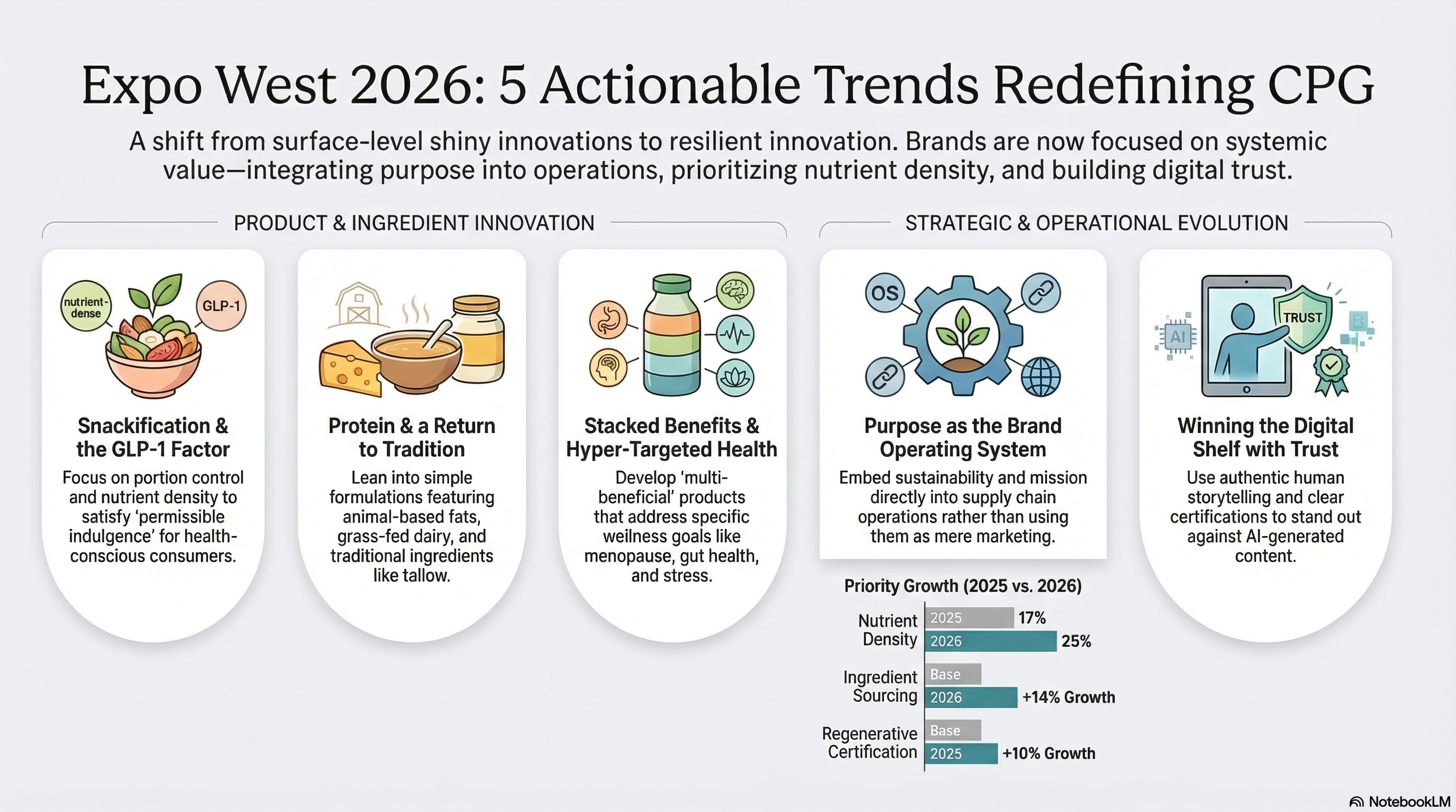
Source: Author, Expo West Speakers & Google NootebookLM
The 45th anniversary of Natural Products Expo West brought nearly 80,000 attendees and over 2,500 booths to Anaheim, showcasing the future of the $343 billion natural and organic industry. While previous years may have been defined by the pursuit of the "shiny new brand" or superficial flavor extensions, 2026 marked a profound shift. Today, the most successful brands are focusing on operational resilience, nutrient density, and building unbreakable consumer trust.
For CPG founders and brand leaders, understanding these shifts is only half the battle. Here are the key trends from Expo West 2026 and how you can apply them to successfully scale your business.
1. The "Snackification" of Diets & The GLP-1 Factor
Snacking is no longer just an in-between treat; snacks now constitute a massive 25% of all calories consumed daily, with 91% of global consumers eating at least one snack a day. Furthermore, the rise of GLP-1 medications is fundamentally changing consumption habits by suppressing hunger urges and acting as a "super power" for portion control. However, consumers aren't willing to sacrifice flavor—73% would rather have a smaller portion of an indulgent snack than a larger portion of a low-fat or low-sugar alternative. This has given rise to the era of "Snack-ros" (macros in snacks), where consumers seek treats packed with protein and healthy carbs.
Actionable Strategy for Brands:
Prioritize "Permissible Indulgence": Stop stripping out flavor for the sake of calorie counting. Instead, focus on nutrient density by incorporating high-quality proteins, healthy fats, and functional fiber to support satiety and gut health, particularly for the GLP-1 demographic.
Embrace Cleaner Sweets: Shift away from sugar alcohols and artificial sweeteners. The market is aggressively moving toward natural, fruit-based sweeteners like dates and monk fruit to satisfy cravings cleanly.
2. "Protein Palooza" Meets a Return to Tradition
Protein remains the undisputed mega-trend, but it has evolved. Expo West 2026 was flooded with protein-infused sodas, pretzels, ice creams, and even tangled vats of protein ramen. However, the real twist this year was a massive resurgence in animal-based proteins and a "return to tradition". Consumers are seeking out fewer ingredients and simplified formulations, leading to a boom in products utilizing grass-fed meat, whey, dairy, and traditional cooking fats like beef tallow in potato and corn chips.
Actionable Strategy for Brands:
Simplify Your Formulations: The backlash against ultra-processed foods is real. Audit your ingredient panels and strip away the unnecessary chemistry.
Don't Fear the Fat: If it fits your brand identity, lean into high-quality animal ingredients and traditional formats. Positioning products around "seed-oil free" or emphasizing ancestral ingredients can capture a highly engaged, health-conscious audience looking for real, whole foods.
3. Purpose as the New Operating System
The definition of CPG innovation has shifted entirely. Pre-pandemic innovation was often superficial—a cool new flavor or packaging tweak. Today, meaningful innovation has moved deep into the supply chain. As venture financing has tightened, profitability now trumps top-line growth. True innovation in 2026 means having a resilient supply chain, sustainable operational practices, and a business model that protects unit economics.
Actionable Strategy for Brands:
Innovate Your Operations: Shift your R&D focus from product novelty to supply chain durability and regenerative practices. Treating impact and purpose as your core "operating system" rather than just a marketing layer builds long-term resilience against market shocks.
Focus on Unit Economics: Investors and retailers are looking for sustainable growth. Ensure your innovations are scalable and can work at the right price point without crushing your margins.
4. Stacked Benefits & Hyper-Targeted Health
Consumers are demanding that their products multitask. The beverage category is going all-in on multi-beneficial RTDs offering prebiotics, postbiotics, energy, and relaxation all in one can. Simultaneously, the women's health category swooped into the show with incredible power, moving past generic multivitamins to hyper-targeted solutions for perimenopause, vaginal health, hormonal balance, and beauty-from-within (highlighted by the rise of Ayurvedic herbs like shatavari).
Actionable Strategy for Brands:
Practice "Benefit Stacking": How many consumer needs can your product solve at once? Combine complementary functional ingredients (like creatine and protein, or hydration and mood enhancement) to offer consumers maximum value for their dollar.
Niche Down to Scale Up: Don't try to be everything to everyone. Identify specific consumer life stages or highly specific wellness needs and design your products to super-serve those exact pockets of consumers.
5. Winning the Digital Shelf with "Un-Automatable" Trust
As artificial intelligence reshapes marketing and search, AI will soon enable bad actors to fake authenticity and manufacture "founder stories" at scale. Because of this, genuine human connection and brand trust will become the most valuable assets in the AI economy. On the digital shelf, where brands must compete with both nimble DTC startups and highly efficient private labels, transparency is the ultimate differentiator. 82% of consumers demand clearer health labels, and they are rewarding brands that provide them.
Actionable Strategy for Brands:
Optimize Product Detail Pages (PDPs) for Transparency: Your digital shelf presence must lead with clarity. Surface dietary certifications (USDA Organic, Non-GMO), clinical data, and supplement facts front and center to immediately establish credibility and win conversions.
Amplify Your Humanity: Use AI to optimize your workflows, but never use it to replace your human story. Lean heavily into authentic, behind-the-scenes content on organic social platforms like LinkedIn, TikTok, and YouTube Shorts to build a moat of loyalty that competitors cannot replicate.
The trends from Expo West are clear. But translating them into real growth for your brand requires the right partners, perspective, and execution. That’s where Channel M comes in. At Channel M, we work closely with founders, investors, and leadership teams to connect brands with the resources they need to scale… from category-leading marketing partners and strategic capital to distribution relationships and growth platforms.
Our model is simple: align the right people around the table so brands can move faster, build smarter, and create long-term enterprise value.
If any of these Expo West insights sparked ideas—or highlighted challenges you’re currently navigating—let’s talk. Whether it’s refining your brand positioning, optimizing your digital shelf, building a stronger growth engine, or identifying the right strategic partners, we’d love to explore how these signals from the market can become actionable momentum for your business. 🤜🏼
